 362
362



 8 min. to read
 1.6k
1.6k
 362
362
You’ve likely encountered many English words that look almost identical to their Russian counterparts. Words like biology, mathematics, aquarium, and microscope are so easy to understand that you feel a real sense of relief when you see them.
The fact is that many such words came into modern languages from Latin and Ancient Greek. These languages of antique civilizations have found their way into practically all modern languages, including Russian and English. And thank goodness for that: learning a foreign language would be more difficult without such familiar elements, which you know from your mother tongue.
But not all is sunshine and roses: some English words borrowed from classical languages evoke no associations and simply baffle: epistemology, metacognition, anthropocentric. What do these words even mean?
However, once you start viewing these words as LEGO structures that can be taken apart, everything becomes much simpler. Each element of a root is a building block that can be used in various combinations. And the combination of words, phrases, and collocations creates a beautifully disordered linguistic masterpiece called “English”—the primary language of international communication, the lingua franca of the modern world.
By viewing complex words as LEGO structures, a whole new world of English will open before you. By learning just 30 key roots, you’ll be able to guess the meanings of thousands of English words you’ve never seen before. A great aid to language learning? Absolutely!
Latin and Greek words coexist in English with vocabulary of entirely different origins. English developed not as a single, cohesive language, but, figuratively speaking, like a giant box of random LEGO pieces from a variety of sets—where modern LEGO Star Wars pieces are mixed with the old LEGO Duplo bricks. Over the centuries, each conquest and each cultural shift added a new layer of vocabulary, turning English into a multilingual hybrid. Here’s a brief history of the English language:
The most ancient inhabitants of the British Isles were the Celts: the Celtic language group includes modern Scots, Irish, and Welsh (the latter is spoken, albeit by very few, in Wales). In modern English, their heritage includes such words as whiskey, bard, clan, hooligan, slogan, penguin, flannel, town, bucket, etc.
Then came the Romans: Julius Caesar made the first attempts to colonize the British Isles in 55-54 BC; then, in 43 AD, Emperor Claudius launched a full-scale conquest of England and Wales. The Romans controlled Britain until 410 AD. Their legacy in the English language includes such words as street, wine, wall, cook, mile, pound, kitchen, ounce, chest, copper, dish, pillow, sack, mint, noon, post, port, camp, cheese, fork, library and many others.
After the Romans left, Germanic tribes arrived: starting around 450 AD, the influential Angles, Saxons, and Jutes began migrating to Britain from what is now northern Germany and Denmark (the Jutland Peninsula). This Germanic influence was compounded by another, also Germanic, impact: from the 8th to the 11th centuries, the British Isles were primarily controlled by Scandinavian Vikings.
During the Germanic period, the “basic vocabulary” of the English language developed. The most important, everyday words in English are of Germanic origin:
we, they, up, in, out, house, room, water, earth, mother, father, son, daughter, man, hand, arm, foot, finger, head, bread, good, way, high, low, long, wide, sun, moon, star, sky, light, full, go, come, give, take, sit, stand, hear, sea, see, think, bear, cow, knife, call, etc.
At this stage, English vocabulary changed radically. Old English was replaced by Middle English, the predecessor of Modern English, which began around 1500.
After the Normans (Frenchified Scandinavian vikings) conquered the British Isles in 1066, French became the language of government and the ruling elite. It continued to exert a significant influence on English in the centuries to follow. French borrowings continued into modern times, although today’s trend is rather the opposite: French is becoming rapidly Anglicized.
Over the course of several centuries, English has absorbed many thousands of French words:
government, justice, literature, parliament, charm, color, ballet, buffet, cuisine, military, general, restaurant, gourmet, bureaucracy, lieutenant, navy, page, cinema, facade, mirage, chance, evidence, fashion, orange, ambiance, entrance, collage, amateur, ceremony, etc.
This has resulted in a linguistic paradox. Modern English, according to linguistic classification, belongs to the Germanic group of Indo-European languages, yet up to 70% of its vocabulary consists of loanwords from the Romance languages – Latin and French. Only the grammar, syntax, and the “basic vocabulary” remain Germanic.
Romano-Germanic mixing has given rise to a large number of so-called “vocabulary doubles”:
(Germanic) vs (Latin-French)
When science, education, and art became fashionable, English “wanted to sound intellectual” and began to actively borrow vocabulary from Latin and Greek. Thanks to this, English got words like
physics, biology, mathematics, diploma, architecture, sculpture, perimeter, proximity, topic, utopia, polygon, legislation, intellectual, microscope, radius, formula, analysis, pathology, appendicitis, canvas, anthem, podium, etc
Latin vocabulary became established in science, law, and academia, while Greek dominated philosophy, mathematics, astronomy, and medicine.
The language spoken today by the British, Americans, and other English-speaking nations largely completed its formation by the early 19th century. However, even today, new words are constantly being added to the English vocabulary: science, technological progress, globalization, and the internet are generating new concepts that are reflected in the language.
Today, English resembles a LEGO monster truck in a box, a mixture of various construction kits: a small Celtic vocabulary, a Germanic language structure and basic vocabulary, dominant vocabulary of Romance origin (Latin and French), Greek loanwords, mostly of a cultural and scientific nature, and a small number of words from other languages, e.g.:
• 🇵🇱 Polish pierogi, kiełbasa, sabre • 🇮🇱 Yiddish glitch, schlep, mensch, chutzpah, bagel, schmooze • 🏴 Russian mammoth, czar, sputnik, vodka • 🇩🇪 German Bratwurst, Kindergarten, Doppelgänger
The Romance influence was further enhanced by borrowings from Italian (piano, concerto, cappuccino, pasta, canteen, etc.) and Spanish (vigilante, guerilla, bonanza, mosquito, canyon, embargo, etc.)
By comparison, Russian is much simpler:
At the same time, Russian remains a distinctly Slavic language, without the English “identity crisis.”
Although the history of the English language is deep and complex, its vocabulary is not your enemy. You can turn it into a useful tool by memorizing some key word roots and learning to “crack” the complex words English has picked up along the way.
Let’s start with a few iconic roots:
• 🌱 bio = life: biography, biology, antibiotic. • 🤖auto = self: autobiography, automatic, autonomy. • 📡 tele = far:telephone, television, telescope.
Once you’ve mastered these basics, parsing long words becomes much easier – just break them down into parts: electroencephalogram (EEG):
The meaning of this complex word: a test that records the brain’s electrical activity. ивность мозга.
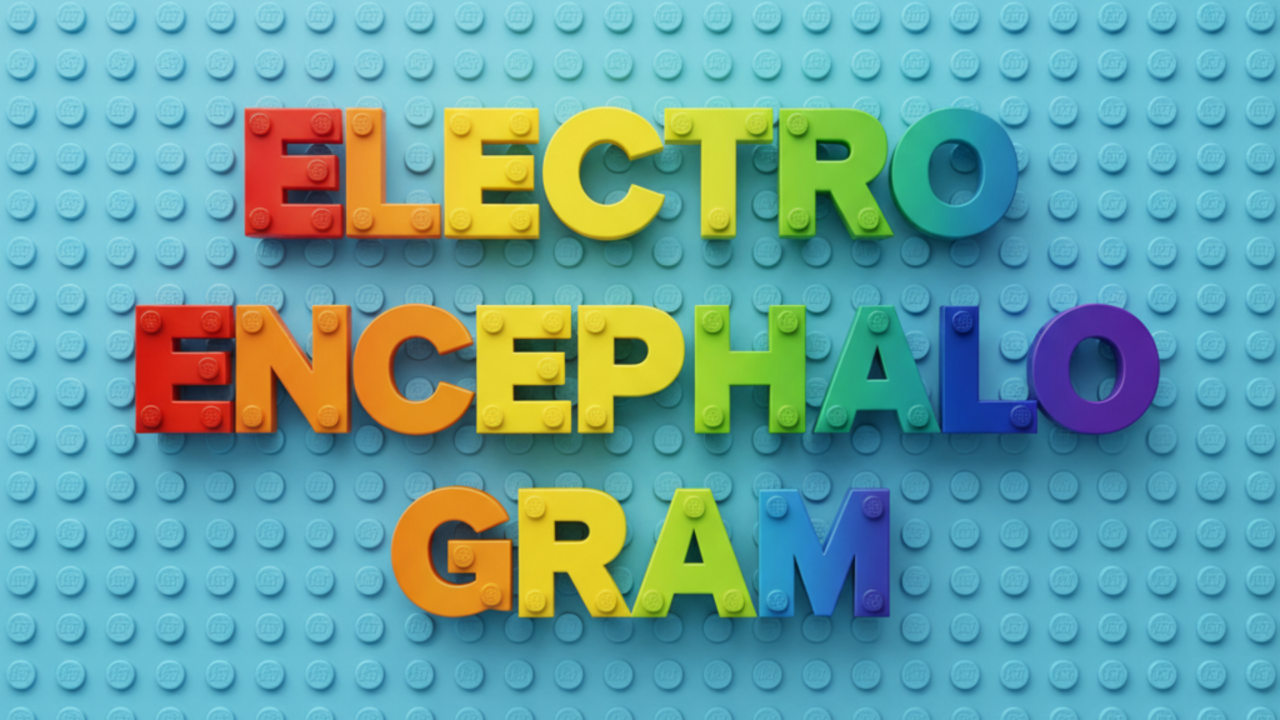
Excellent! Now even such a dauntingly long academic word becomes understandable. With this approach, a significant portion of university vocabulary can be read with surprising ease.
1. act – do: action, react, activate.
👉 The alarm activated, and everyone reacted instantly.
2. aud – hear: audio, audience, audible.
👉 The speaker wasn’t audible until the audience became quiet.
3. cred – believe: credible, credit, incredible.
👉 Her story was so incredible that no one believed her.
4. dict – speak: predict, dictionary, contradict.
👉 The new data contradicts our earlier predictions.
5. duc / duct – lead conduct, educate, introduce.
👉 The teacher introduced a new method to educate her students.
6. form – shape: transform, uniform, formulate.
👉 Scientists formulated a theory that transformed our understanding.
7. ject – throw: project, inject, reject.
👉 The committee rejected the project after reviewing the details.
8. manu – hand: manu – hand: manual, manufacture, manuscript.
👉 She discovered a manuscript written entirely by hand.
9. port – carry: transport, import, portable.
👉 The device is portable enough to carry anywhere.
10. scrib / scrip – write: description, manuscript, subscribe.
👉 I subscribed to the channel after reading the description.
11. spect – look: inspect , spectacle, perspective.
👉 Changing your perspective helps you inspect problems clearly.
12. struct – build: construct, structure, instruct.
👉 Her clear explanations helped instruct the entire team.
13. vid / vis – see: video, visible, vision.
👉 The mountain was barely visible through the fog.
14. voc / vok – voice / call: vocal, provoke, advocate.
👉 His opinion provoked a vocal reaction from the group.
15. mort – death: mortal, immortal, mortify.
👉 The mistake nearly mortified him in front of everyone.
16. contra – against / opposite: contradict, contrast, contrary.
👉 The professor encouraged students to contrast different theories and contradict assumptions.
17. bene – good: benefit, benevolent, beneficial.
👉 Reading regularly is beneficial for your vocabulary.
18. mal – bad: malfunction, malnutrition, malpractice.
👉 The device malfunctioned due to a software error.
19. cent – hundred: century, percent, centennial.
👉 Only ten percent of the century has passed, yet so much changed.
20. terr – earth / land: territory, terrain, subterranean.
👉 Explorers mapped the rocky terrain of the territory.
1. chrono – time: chronology, synchronize, chronic.
We synchronized our clocks to keep the exact time.
2. morph – shape / form: metamorphosis, polymorphic, morphology.
The insect undergoes a complete metamorphosis.
3. path / patho – feeling / disease: sympathy, pathology, apathetic.
He felt sympathy for the student who looked apathetic.
4. the(o) – god: theology, polytheism, monotheistic.
Ancient cultures often practiced polytheism.
5. anthrop(o) – human: anthropology, anthropocentric, misanthrope.
Anthropology helps us understand human societies.
6. phil(o) – love: philosophy, bibliophile, philanthropy.
A true bibliophile can spend hours in a bookstore.
7. log / logy – study / word: biology, geology, psychology.
Psychology is the study of the mind and behavior.
8. crypt(o) – hidden, secret: cryptic, cryptography, encrypt, decrypt.
The message was so cryptic that only experts could decrypt it.
9. macro – large: macroeconomics, macromolecule, macrostructure.
Macroeconomics studies large-scale economic systems.
10. poly – many: polygon, polygamy, polytheism.
A polygon is any shape with many sides.

1. Maladaptive:
His “maladaptive” strategy for saving money was to stop buying coffee but start buying luxury candles.
2. Chronological:
My day is never chronological. Somehow breakfast always happens at 2 p.m.
3. Contravision:
Her contravision of the movie was that the villain was actually the only reasonable character.
4. Macrostructure:
The macrostructure of my life currently looks like a LEGO set built by a sleepy toddler.
5. Philology:
He claimed he studied philology, but really he just liked correcting everyone’s grammar at parties.
6. Spectacular:
The spectacular sunset was ruined only by one guy loudly explaining crypto to his date.
You can find the answers at the end of the article!
Roots give structure to the chaotic LEGO bricks of English. Through reading, active recall, and real-life use, you can begin to navigate vocabulary and develop your skills quite easily.
We recommend spaced repetition to really memorize and retain these roots.
Greek and Latin roots are the English language’s cheat code. They’re essential if you want to:
• Read news and academic texts with confidence • Instantly understand unfamiliar vocabulary • Sound more advanced and precise • Learn faster without memorizing lists of obscure words
The more roots you know, the more decipherable English becomes. So the next time you see a scary word like photosensitization or psychophysiology, all you have to do is break it down.
English is only scary until you see how it works. Once you become familiar with its building blocks, English stops being a puzzle and turns into a LEGO set: you become an architect who understands the blueprints.
Subscribe to our digest on Facebook, Instagram, Telegram – here we talk about the history and modern days of America and, first of all, about what is happening in Boston and Massachusetts.
Аутентичный текст проекта WelcomeToMA © и “ILike.Boston”™. All Rights Reserved. 2025. Использование текстовых материалов без изменений онлайн в некоммерческих целях разрешается c упоминанием названия проекта «Welcome to MA»© (или ленты новостей “ILike.Boston”™) и активной ссылки на оригинал материала на сайте или на одной из соцсетей издания




 8 min
8 min 6.3k
6.3k 1576
1576 
